Sacred Attention, Ecological Agency + MAKING TIME w/ Maria Bowler
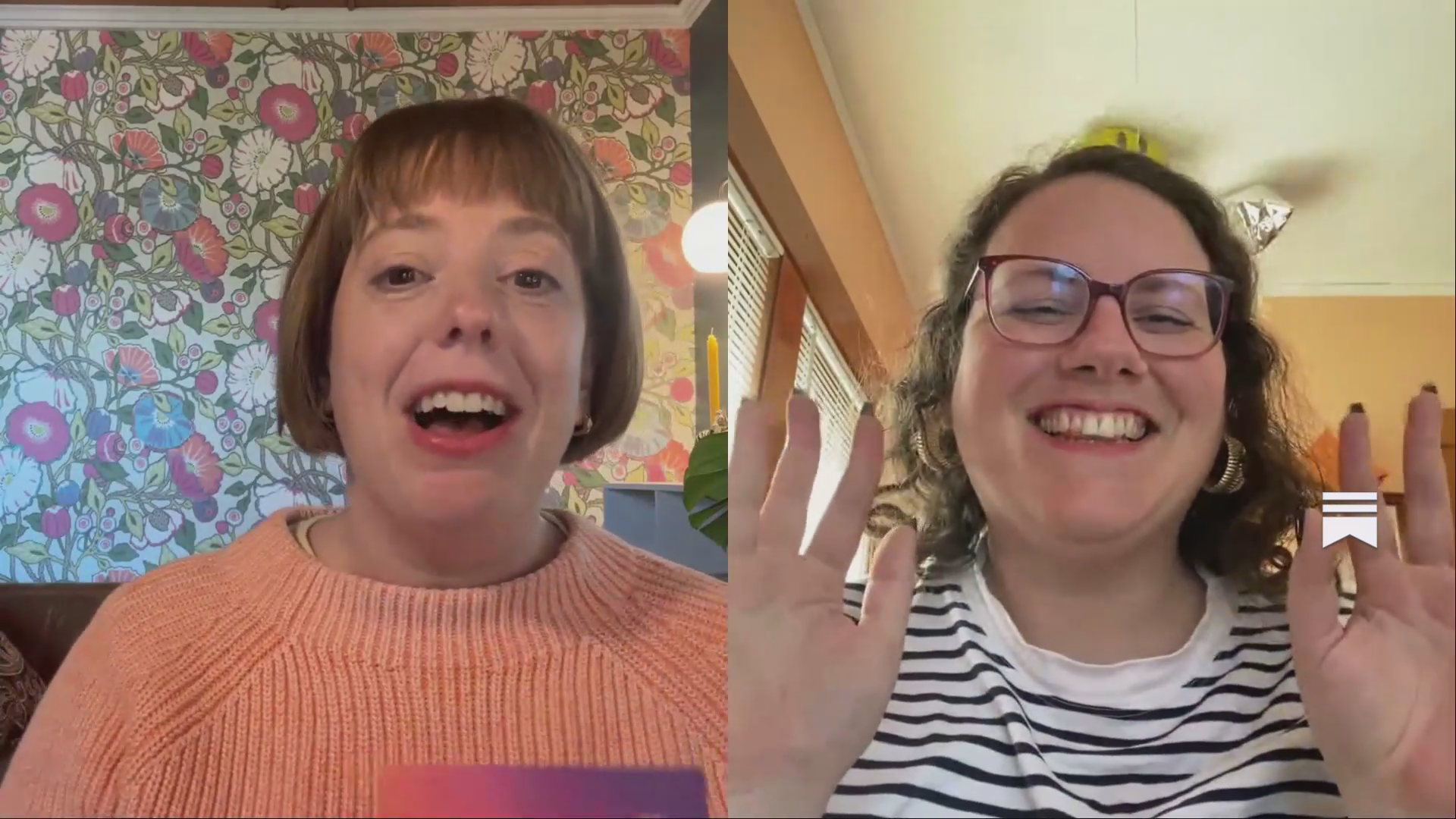
This afternoon, Maria Bowler and I experimented with our first ever Substack Live!
Maria is the author of Making Time: A New Vision for Crafting a Life Beyond Productivity.
We had a wonderful conversation about attention, social media, agency, community, and our shared battle against scarcity.
Enjoy, friends!! xo
Transcript
Maria Bowler (00:00:00.029):
Hello, everyone.
Maria Bowler (00:00:01.569):
If I'm already connected, hello.
Maria Bowler (00:00:03.930):
This is my first time doing a Substack Live.
Maria Bowler (00:00:06.250):
And of course, I am doing it with the amazing Amelia Ruby.
Maria Bowler (00:00:09.331):
Hello.
Maria Bowler (00:00:12.212):
Author of Your Attention is Sacred, Except on Simple Media.
Maria Bowler (00:00:15.393):
A fabulous manifesto.
Maria Bowler (00:00:17.293):
This is the real deal.
Maria Bowler (00:00:19.654):
I am delighted to be having a conversation with Amelia.
Maria Bowler (00:00:22.794):
Amelia, if you don't know...
Maria Bowler (00:00:25.675):
which you probably already do,
Maria Bowler (00:00:27.735):
is a fabulous writer,
Maria Bowler (00:00:29.236):
thinker,
Maria Bowler (00:00:29.796):
podcast host of several podcasts,
Maria Bowler (00:00:31.896):
including Off the Grid,
Maria Bowler (00:00:33.016):
a podcast about doing business and life off of social media.
Maria Bowler (00:00:37.317):
Also, she is the owner-leader of a podcast studio, Softer Sounds.
Maria Bowler (00:00:43.479):
Amelia, tell us more about who you are, even though many of us already know you.
Amelia Hruby, PhD (00:00:51.303):
Well, thank you, Maria.
Amelia Hruby, PhD (00:00:52.584):
This is so fun.
Amelia Hruby, PhD (00:00:53.584):
I have not been live since my Instagram days, which was over four years ago now.
Amelia Hruby, PhD (00:00:59.968):
So yeah, I'm Amelia.
Amelia Hruby, PhD (00:01:02.110):
I do run a podcast studio called Softer Sounds and host a popular marketing podcast
Amelia Hruby, PhD (00:01:06.652):
called Off the Grid.
Amelia Hruby, PhD (00:01:08.273):
It's all about, well, in theory, it's all about leaving social media.
Amelia Hruby, PhD (00:01:11.915):
But like all of my work,
Amelia Hruby, PhD (00:01:13.797):
leaving social media is just a doorway into a much deeper sense of liberation from
Amelia Hruby, PhD (00:01:21.201):
the norms and powers that be and today we're going to talk about yeah my book your
Amelia Hruby, PhD (00:01:26.325):
attention is sacred except on social media and your book making time a new vision
Amelia Hruby, PhD (00:01:31.849):
for crafting a life beyond productivity which is quoted in my book so i'm very
Amelia Hruby, PhD (00:01:36.353):
excited for this multi-book chat we're having
Maria Bowler (00:01:40.509):
Oh, thank you for that plug.
Maria Bowler (00:01:41.910):
The mutual manifestos.
Maria Bowler (00:01:43.590):
We love a manifesto.
Maria Bowler (00:01:46.612):
I am so curious about your journey from knowing the subject of life on and offline
Maria Bowler (00:01:56.356):
as a work,
Maria Bowler (00:01:59.577):
as a thinker and as your work interviewing people about their experiences.
Maria Bowler (00:02:03.919):
But I'm curious about how you knew that it was time to do a book.
Amelia Hruby, PhD (00:02:09.500):
Yeah, in a few ways.
Amelia Hruby, PhD (00:02:11.441):
I think that, you know, I had traditionally published an illustrated journal before.
Amelia Hruby, PhD (00:02:17.684):
So I'd done self-publishing.
Amelia Hruby, PhD (00:02:19.725):
I'd done traditional publishing.
Amelia Hruby, PhD (00:02:21.466):
I'd also written a dissertation,
Amelia Hruby, PhD (00:02:23.607):
which is a very intense academic writing and publication process.
Amelia Hruby, PhD (00:02:29.309):
And so I had sworn off books.
Amelia Hruby, PhD (00:02:31.610):
When I started podcasting, I was like, this is it forever.
Amelia Hruby, PhD (00:02:34.332):
Yeah.
Amelia Hruby, PhD (00:02:35.052):
speaking for me is so much easier than writing.
Amelia Hruby, PhD (00:02:37.453):
I don't self edit when I talk.
Amelia Hruby, PhD (00:02:39.814):
But when I write, it's so it's very intensive process.
Amelia Hruby, PhD (00:02:43.355):
I'm not like a, I'm not a morning pages writer.
Amelia Hruby, PhD (00:02:45.997):
I'm not much of a free writer.
Amelia Hruby, PhD (00:02:47.537):
I'm like, let me figure out the idea in my brain and put it down as articulately as possible.
Amelia Hruby, PhD (00:02:52.719):
So I didn't want to write a book for a long time.
Amelia Hruby, PhD (00:02:56.961):
But I think that what happened was,
Amelia Hruby, PhD (00:03:00.445):
Honestly,
Amelia Hruby, PhD (00:03:00.825):
just like a well of frustration started to grow in me because I was reading a lot
Amelia Hruby, PhD (00:03:05.889):
of books about social media and I was noticing that they were all written by white
Amelia Hruby, PhD (00:03:12.273):
men in like middle aged white men,
Amelia Hruby, PhD (00:03:14.574):
which is fine.
Amelia Hruby, PhD (00:03:15.755):
That perspective is out there.
Amelia Hruby, PhD (00:03:17.518):
But none of them spoke to my experiences of social media.
Amelia Hruby, PhD (00:03:20.939):
They were also typically written by journalists or academics.
Amelia Hruby, PhD (00:03:23.739):
I'm like, where are the people who gave their 20s to Instagram writing books about this?
Amelia Hruby, PhD (00:03:29.680):
And not just memoir.
Amelia Hruby, PhD (00:03:30.960):
We definitely have influencer memoirs.
Amelia Hruby, PhD (00:03:32.541):
But who is out there that I can relate to that's speaking clearly and critically
Amelia Hruby, PhD (00:03:38.602):
about the internet and about social media?
Amelia Hruby, PhD (00:03:41.082):
And I read and I read and I read and just felt like...
Amelia Hruby, PhD (00:03:47.026):
none of the books spoke to that.
Amelia Hruby, PhD (00:03:48.768):
And that was like my big clue that I had to write it.
Amelia Hruby, PhD (00:03:51.831):
Like it wasn't going to happen if I didn't do it.
Amelia Hruby, PhD (00:03:53.873):
So that's how I decided to write the book.
Maria Bowler (00:03:56.996):
I want to highlight that and just like brought a huge circle around that with like
Maria Bowler (00:04:00.939):
listening to your own sense of frustration and making that into a creative impulse
Maria Bowler (00:04:06.505):
and saying there's,
Maria Bowler (00:04:07.746):
oh,
Maria Bowler (00:04:08.186):
the fact that I'm
Maria Bowler (00:04:10.848):
Not finding myself satisfied by what's out there is not a sign that I'm wrong.
Maria Bowler (00:04:16.671):
It's something that needs to be said, which is incredible.
Maria Bowler (00:04:22.594):
I'm so happy you did that.
Maria Bowler (00:04:24.394):
So many of us make our sense of frustrations wrong.
Maria Bowler (00:04:29.597):
Instead of just saying,
Maria Bowler (00:04:30.918):
oh,
Maria Bowler (00:04:31.098):
no,
Maria Bowler (00:04:31.298):
it means that there is leadership in this conversation that is there's a vacuum of
Maria Bowler (00:04:36.160):
leadership in this conversation in a certain area of it.
Maria Bowler (00:04:39.682):
And I can.
Maria Bowler (00:04:40.851):
be there so and another thing you said that really fascinated me was of course in
Maria Bowler (00:04:47.776):
my experience in academia and and knowing and loving academics the process of
Maria Bowler (00:04:53.059):
writing a dissertation is a very specific one and our relationship to our own
Maria Bowler (00:04:59.263):
thoughts is very specific and so i'm curious about how
Maria Bowler (00:05:03.106):
your relationship with your own writing voice shifted how you were able to say,
Maria Bowler (00:05:07.588):
all right,
Maria Bowler (00:05:09.308):
you had enjoyed your time free from that as a podcast host,
Maria Bowler (00:05:14.190):
and then you moved into writing.
Maria Bowler (00:05:15.991):
So did you take some of the freedom that you had cultivated in podcasting,
Maria Bowler (00:05:20.673):
or what was that like?
Amelia Hruby, PhD (00:05:22.773):
Yeah, I think that
Amelia Hruby, PhD (00:05:27.962):
I really thought I had left academia behind entirely.
Amelia Hruby, PhD (00:05:31.085):
So I defended my dissertation like five and a half years ago now.
Amelia Hruby, PhD (00:05:35.369):
And I was pretty sure that that was over.
Amelia Hruby, PhD (00:05:38.171):
And then I was really surprised when I started writing my book at how academic it got so fast.
Maria Bowler (00:05:45.357):
In the best way, guys.
Maria Bowler (00:05:46.138):
It's so good.
Amelia Hruby, PhD (00:05:47.887):
Yeah.
Maria Bowler (00:05:48.667):
So careful thinking.
Amelia Hruby, PhD (00:05:52.569):
Thank you.
Amelia Hruby, PhD (00:05:53.129):
I mean,
Amelia Hruby, PhD (00:05:53.449):
it taught me that that is still in me,
Amelia Hruby, PhD (00:05:55.870):
but I don't have to be an academic the way I was trained to.
Amelia Hruby, PhD (00:05:59.271):
So I went through a philosophy PhD program.
Amelia Hruby, PhD (00:06:02.552):
So every...
Amelia Hruby, PhD (00:06:04.693):
every tiny step of your argument has to be justified,
Amelia Hruby, PhD (00:06:08.195):
elucidated,
Amelia Hruby, PhD (00:06:09.515):
and supported,
Amelia Hruby, PhD (00:06:10.456):
not only by your argument itself,
Amelia Hruby, PhD (00:06:12.117):
but by sources.
Amelia Hruby, PhD (00:06:13.257):
I really learned how to be a super critical reader and craft the tightest argument possible.
Amelia Hruby, PhD (00:06:20):
And coming out of that,
Amelia Hruby, PhD (00:06:21.101):
I think that's why I wrote an illustrated journal,
Amelia Hruby, PhD (00:06:22.941):
because I was like,
Amelia Hruby, PhD (00:06:23.602):
I need it to be loose.
Amelia Hruby, PhD (00:06:25.303):
I need the expectations to be that we're just going to flow,
Amelia Hruby, PhD (00:06:28.324):
we're going to ask more questions than we offer answers.
Amelia Hruby, PhD (00:06:31.625):
And that was
Amelia Hruby, PhD (00:06:33.426):
really healing.
Amelia Hruby, PhD (00:06:34.387):
It was funny.
Amelia Hruby, PhD (00:06:35.088):
I did the edits on that journal at the same time I finished my dissertation and it
Amelia Hruby, PhD (00:06:39.533):
was really hard,
Amelia Hruby, PhD (00:06:40.694):
but I think I needed both.
Amelia Hruby, PhD (00:06:42.436):
Like I couldn't stay in the hypercritical academic space without the very like
Amelia Hruby, PhD (00:06:49.303):
affirmational journaling spiritual space I was also writing in.
Amelia Hruby, PhD (00:06:53.987):
And somehow when I
Amelia Hruby, PhD (00:06:55.849):
sat down to write this book, they kind of both arrived.
Amelia Hruby, PhD (00:06:58.730):
I think it taught me that I am still an academic at heart,
Amelia Hruby, PhD (00:07:03.931):
even though I don't like academia as an institution and I'm not interested in ever
Amelia Hruby, PhD (00:07:09.512):
returning.
Amelia Hruby, PhD (00:07:10.133):
I still love to shape ideas in this way that I was trained to for over a decade, right?
Amelia Hruby, PhD (00:07:16.874):
And so writing the book, the reason I
Amelia Hruby, PhD (00:07:20.560):
called it a manifesto and put that on the cover is I wanted to claim the sort of
Amelia Hruby, PhD (00:07:25.104):
like critical argumentation that I learned as an academic while bringing through
Amelia Hruby, PhD (00:07:30.510):
the sort of fiery voice I had as a feminist writer and political writer and the
Amelia Hruby, PhD (00:07:36.776):
like soft spiritual side that I had you know in putting together an illustrated
Amelia Hruby, PhD (00:07:41.400):
journal so I
Amelia Hruby, PhD (00:07:43.092):
It's wild,
Amelia Hruby, PhD (00:07:43.792):
but I truly feel like in the like 100 pages of this book,
Amelia Hruby, PhD (00:07:46.914):
I have integrated like three core aspects of my personal identity.
Amelia Hruby, PhD (00:07:51.036):
And what I've heard from readers is it allows them to arrive in those different
Amelia Hruby, PhD (00:07:55.759):
parts of themselves as well.
Amelia Hruby, PhD (00:07:57.180):
So yeah,
Amelia Hruby, PhD (00:07:58.300):
it's really,
Amelia Hruby, PhD (00:08:00.161):
it reminds me of something I think you wrote about literally on your Substack today,
Amelia Hruby, PhD (00:08:04.364):
which is like,
Amelia Hruby, PhD (00:08:05.664):
I didn't think it made any sense to put any of that together.
Amelia Hruby, PhD (00:08:08.306):
But in fact, it like only makes sense if you put all of it together.
Maria Bowler (00:08:13.504):
Yes.
Maria Bowler (00:08:15.405):
I feel so strongly about that.
Maria Bowler (00:08:18.187):
It adds to a richness of an experience.
Maria Bowler (00:08:23.011):
So what you do in this book is you think really carefully about the words that we
Maria Bowler (00:08:29.455):
swim in but don't take for granted,
Maria Bowler (00:08:31.076):
among other things.
Maria Bowler (00:08:31.757):
So one of the things is, what is attention?
Maria Bowler (00:08:34.478):
What do we really mean?
Maria Bowler (00:08:35.639):
Yeah.
Maria Bowler (00:08:37.100):
When we say we're paying attention versus giving attention, what is an attention economy?
Maria Bowler (00:08:42.204):
So I'm curious if you could just parse out a little bit for us.
Maria Bowler (00:08:46.447):
For you,
Maria Bowler (00:08:47.467):
why is it important for you to distinguish between an attention economy versus an
Maria Bowler (00:08:52.491):
attention ecology?
Amelia Hruby, PhD (00:08:53.712):
Yeah,
Amelia Hruby, PhD (00:08:56.114):
so part of what was fun about the book was sort of going back to the etymology of
Amelia Hruby, PhD (00:09:01.197):
different words,
Amelia Hruby, PhD (00:09:01.898):
thinking about where they came from,
Amelia Hruby, PhD (00:09:03.359):
thinking about the language we use around them.
Amelia Hruby, PhD (00:09:08.077):
And really,
Amelia Hruby, PhD (00:09:11.260):
a huge key to unlock this for me was thinking about the definition of the word
Amelia Hruby, PhD (00:09:16.123):
economy and where does this come from and what does it bring along with it?
Amelia Hruby, PhD (00:09:20.927):
I actually took a beautiful course through a school called the Gaia Educational
Amelia Hruby, PhD (00:09:27.532):
Institute last year.
Amelia Hruby, PhD (00:09:29.213):
where the teachers worked on this shift from economy to ecology.
Amelia Hruby, PhD (00:09:32.415):
And we talked about the difference between economos and ecologos.
Amelia Hruby, PhD (00:09:36.358):
And I was like, oh, this is so interesting how we're making this shift.
Amelia Hruby, PhD (00:09:40.461):
And that was very focused on economics.
Amelia Hruby, PhD (00:09:42.783):
But then I started to see it in the concept of the attention economy.
Amelia Hruby, PhD (00:09:46.345):
So
Amelia Hruby, PhD (00:09:47.746):
When we talk about the economy in the 21st century,
Amelia Hruby, PhD (00:09:51.808):
living in the U.S.,
Amelia Hruby, PhD (00:09:52.988):
as you and I currently do in the Midwest,
Amelia Hruby, PhD (00:09:54.969):
like the economy typically refers to the GDP.
Amelia Hruby, PhD (00:09:59.091):
Like when people are talking about the economy, they're talking about gross domestic product.
Amelia Hruby, PhD (00:10:02.993):
Sometimes they're also talking about unemployment rates, if you notice, and like interest rates.
Amelia Hruby, PhD (00:10:07.935):
Those are the things that come up.
Amelia Hruby, PhD (00:10:08.935):
If you're like watching an economic briefing on the news,
Amelia Hruby, PhD (00:10:11.276):
which who watches the news,
Amelia Hruby, PhD (00:10:12.697):
but even if you just skim a headline,
Amelia Hruby, PhD (00:10:14.458):
it's
Amelia Hruby, PhD (00:10:14.898):
Those are going to be the stats they triangulate to try to determine how's the economy doing.
Amelia Hruby, PhD (00:10:20.490):
And that is so far divorced from most people's actual experience of money and of
Amelia Hruby, PhD (00:10:27.295):
resources that they have.
Amelia Hruby, PhD (00:10:29.496):
And if you trace the origin of GDP, that's actually where it comes from.
Amelia Hruby, PhD (00:10:34.119):
This concept,
Amelia Hruby, PhD (00:10:35.260):
this stat was invented during the Great Depression when people were experiencing
Amelia Hruby, PhD (00:10:40.864):
extreme poverty,
Amelia Hruby, PhD (00:10:42.145):
but the government was saying the economy is improving and people are like,
Amelia Hruby, PhD (00:10:45.747):
I have nothing.
Amelia Hruby, PhD (00:10:47.028):
How is it improving?
Amelia Hruby, PhD (00:10:47.828):
And what they meant is factories are making more.
Amelia Hruby, PhD (00:10:50.570):
We can see more production,
Amelia Hruby, PhD (00:10:52.592):
but it doesn't actually mean anyone,
Amelia Hruby, PhD (00:10:56.016):
meaning like individuals have more,
Amelia Hruby, PhD (00:10:57.717):
at least not the workers for sure.
Amelia Hruby, PhD (00:10:59.139):
So that helped me start to see that like economics is something I take for granted
Amelia Hruby, PhD (00:11:05.565):
as impacting my personal life,
Amelia Hruby, PhD (00:11:07.267):
but it's always been this sort of like,
Amelia Hruby, PhD (00:11:10.558):
I just think of it as this like foggy smear over my life.
Amelia Hruby, PhD (00:11:13.919):
It actually keeps me from having a clear relationship to my resources.
Amelia Hruby, PhD (00:11:17.460):
And I think ecology is the opposite of that.
Amelia Hruby, PhD (00:11:20.462):
Like ecology is an invitation into direct relationship with the natural world of
Amelia Hruby, PhD (00:11:26.024):
which we are a part.
Amelia Hruby, PhD (00:11:27.164):
The world is the natural world.
Amelia Hruby, PhD (00:11:28.564):
They're not distinct.
Amelia Hruby, PhD (00:11:29.425):
Yeah.
Amelia Hruby, PhD (00:11:30.479):
But what I realized writing the book is like anywhere that I'm using an economic
Amelia Hruby, PhD (00:11:35.183):
metaphor,
Amelia Hruby, PhD (00:11:36.064):
anywhere I'm talking about productivity,
Amelia Hruby, PhD (00:11:37.585):
anywhere I'm talking about money,
Amelia Hruby, PhD (00:11:38.806):
anywhere I'm talking about wealth or resource,
Amelia Hruby, PhD (00:11:42.429):
I immediately feel much better if I use an ecological metaphor,
Amelia Hruby, PhD (00:11:45.871):
if I can shift into that different framework,
Amelia Hruby, PhD (00:11:48.714):
that different relationship.
Amelia Hruby, PhD (00:11:50.975):
then everything, like my perspective changes.
Amelia Hruby, PhD (00:11:54.716):
And I stopped seeing myself as like a productive, potentially productive individual.
Amelia Hruby, PhD (00:12:00.137):
And I start to see myself as embedded in a web of support where I can ask and
Amelia Hruby, PhD (00:12:05.619):
offer,
Amelia Hruby, PhD (00:12:05.999):
receive and give.
Amelia Hruby, PhD (00:12:07.399):
And that makes all the difference on like,
Amelia Hruby, PhD (00:12:10.360):
whether we're talking about attention or anything else.
Maria Bowler (00:12:14.561):
Okay.
Maria Bowler (00:12:14.961):
Wow.
Maria Bowler (00:12:15.201):
You said so much there.
Maria Bowler (00:12:17.501):
And my brain is,
Maria Bowler (00:12:22.715):
What I heard was there is a felt experience is different when we're thinking in
Maria Bowler (00:12:31.137):
terms of economic metaphors versus ecological metaphors,
Maria Bowler (00:12:33.777):
but also that we can actually access our felt experience more clearly when we're
Maria Bowler (00:12:39.719):
using ecological metaphors,
Maria Bowler (00:12:41.159):
because then we're thinking in terms of relationships that actually exist.
Maria Bowler (00:12:47.481):
resources that actually exist,
Maria Bowler (00:12:49.702):
rather than abstract measurements that we may not even fully understand or be able
Maria Bowler (00:12:56.486):
to do much with,
Maria Bowler (00:12:57.766):
but we're just aware,
Maria Bowler (00:12:58.847):
ugh,
Maria Bowler (00:12:59.067):
there's more or less of something,
Maria Bowler (00:13:01.288):
including my attention,
Maria Bowler (00:13:02.369):
I could be using and paying.
Maria Bowler (00:13:06.531):
And what is so fruitful about the idea of attending to,
Maria Bowler (00:13:13.494):
looking at things,
Maria Bowler (00:13:14.355):
looking at our attention and our time,
Maria Bowler (00:13:16.974):
how we're spending it on social media in terms of ecology and relationship is that
Maria Bowler (00:13:22.275):
then we can actually ask more we actually ask clearer questions about what is
Maria Bowler (00:13:27.616):
actually happening between us and this thing so what have you noticed is actually
Maria Bowler (00:13:36.038):
happening with your attention on social media versus not on social media what what
Maria Bowler (00:13:44.997):
Does our relationship with attention change?
Maria Bowler (00:13:47.058):
Or how do you think about that?
Amelia Hruby, PhD (00:13:49.300):
Yeah.
Amelia Hruby, PhD (00:13:50.020):
Yeah, I really like that you're pointing to abstraction there.
Amelia Hruby, PhD (00:13:54.222):
And I think that,
Amelia Hruby, PhD (00:13:56.623):
you know,
Amelia Hruby, PhD (00:13:56.844):
the original definitions of economics,
Amelia Hruby, PhD (00:13:58.845):
like back in,
Amelia Hruby, PhD (00:14:00.185):
if we look to the Greek etymology,
Amelia Hruby, PhD (00:14:01.806):
was like about the household.
Amelia Hruby, PhD (00:14:03.007):
Yeah.
Amelia Hruby, PhD (00:14:04.562):
And so it was very much in our homes with us.
Amelia Hruby, PhD (00:14:07.625):
But now,
Amelia Hruby, PhD (00:14:09.846):
economics feels so abstracted from our own material resources,
Amelia Hruby, PhD (00:14:14.971):
even our shared material resources.
Amelia Hruby, PhD (00:14:16.772):
So I love how you're pointing to shifting to ecology or an ecological model helps
Amelia Hruby, PhD (00:14:21.996):
us just remove layers of abstraction,
Amelia Hruby, PhD (00:14:24.398):
get in direct relationship.
Amelia Hruby, PhD (00:14:26.460):
And I'm thinking of that
Amelia Hruby, PhD (00:14:29.242):
in terms of your question about like, what does social media do to our attention?
Amelia Hruby, PhD (00:14:32.785):
Because I think that it puts more layers of abstraction or just like technological
Amelia Hruby, PhD (00:14:39.869):
distraction between us and our lives and the people we care about.
Amelia Hruby, PhD (00:14:45.633):
And so this happens on so many different scales.
Amelia Hruby, PhD (00:14:49.256):
We can think about what it means to like have a friend who you only interact with
Amelia Hruby, PhD (00:14:53.879):
in Instagram stories versus someone you actually like call or talk to directly.
Amelia Hruby, PhD (00:15:00.494):
You know,
Amelia Hruby, PhD (00:15:00.794):
I can even think of not to go to like meta or behind the scenes,
Amelia Hruby, PhD (00:15:04.479):
but even our relationship here.
Amelia Hruby, PhD (00:15:06.222):
We met because your publisher pitched me to cover your book,
Amelia Hruby, PhD (00:15:10.328):
which I was like,
Amelia Hruby, PhD (00:15:10.908):
hell yeah,
Amelia Hruby, PhD (00:15:11.309):
I love this.
Amelia Hruby, PhD (00:15:13.120):
But I think and like we did it, we had a conversation for my podcast.
Amelia Hruby, PhD (00:15:17.042):
And then it was so like enriching that we started like voice messaging each other.
Amelia Hruby, PhD (00:15:20.705):
And we've been doing that for nine months now.
Amelia Hruby, PhD (00:15:24.107):
And I think there's like a tangible closeness in this even virtually mediated relationship that
Amelia Hruby, PhD (00:15:31.571):
Because the voice message is a direct communication form for us.
Amelia Hruby, PhD (00:15:35.673):
If we had just followed each other on Instagram and I had started liking your
Amelia Hruby, PhD (00:15:38.975):
stories and DMing you,
Amelia Hruby, PhD (00:15:40.515):
I don't think this live would be happening.
Amelia Hruby, PhD (00:15:42.396):
I don't think our relationship would have become an actual friendship.
Amelia Hruby, PhD (00:15:45.478):
It would have stayed like internet acquaintances.
Amelia Hruby, PhD (00:15:50.741):
And to me, that has to do with the way that like social media abstracts these sort of
Amelia Hruby, PhD (00:15:58.666):
It's going to sound so academic.
Amelia Hruby, PhD (00:15:59.867):
I'm like the technologies of relationships.
Amelia Hruby, PhD (00:16:02.048):
Like it turns all of that into like liking,
Amelia Hruby, PhD (00:16:04.650):
commenting,
Amelia Hruby, PhD (00:16:05.391):
DMing,
Amelia Hruby, PhD (00:16:06.452):
as opposed to like,
Amelia Hruby, PhD (00:16:07.933):
you know,
Amelia Hruby, PhD (00:16:08.233):
if we want to talk,
Amelia Hruby, PhD (00:16:08.793):
we have to figure out how do we want to talk?
Amelia Hruby, PhD (00:16:10.274):
What works for us?
Amelia Hruby, PhD (00:16:11.495):
What do we like?
Amelia Hruby, PhD (00:16:12.196):
Like instead of us having a conversation about that.
Amelia Hruby, PhD (00:16:14.998):
And so that's just one tiny example.
Amelia Hruby, PhD (00:16:18.600):
I think there are so many other things social media does to our attention,
Amelia Hruby, PhD (00:16:22.143):
but that's what I think it does to our relationships just to start there.
Amelia Hruby, PhD (00:16:24.745):
Yeah.
Maria Bowler (00:16:26.505):
One of the reasons that example is so delightful to me is because it's not a
Maria Bowler (00:16:31.467):
technology versus no technology example.
Maria Bowler (00:16:34.929):
It's not saying your real life is just the things around you,
Maria Bowler (00:16:39.290):
which exists,
Maria Bowler (00:16:42.331):
but that it contains nuance and it's looking at what is actually happening and
Maria Bowler (00:16:49.334):
relationships can actually happen in life.
Maria Bowler (00:16:52.913):
digitally.
Maria Bowler (00:16:53.773):
This is not a digital analog conversation.
Amelia Hruby, PhD (00:16:57.275):
Yeah.
Amelia Hruby, PhD (00:16:58.816):
I think that that's a false binary at this point in contemporary society.
Amelia Hruby, PhD (00:17:04.339):
I think that
Amelia Hruby, PhD (00:17:06.587):
like we are all in some degree interacting with technology and leading digital lives.
Amelia Hruby, PhD (00:17:12.131):
And I think that everyone's experience is different.
Amelia Hruby, PhD (00:17:15.374):
I think it's a broad spectrum of like how online your life or work is,
Amelia Hruby, PhD (00:17:18.897):
but it's something that intrigues me.
Amelia Hruby, PhD (00:17:22.339):
Like it's why I am not,
Amelia Hruby, PhD (00:17:24.801):
you know,
Amelia Hruby, PhD (00:17:25.001):
in my podcast or my writing,
Amelia Hruby, PhD (00:17:26.562):
I'm not over here being like,
Amelia Hruby, PhD (00:17:28.364):
here's how I hacked my smartphone or here's how I,
Amelia Hruby, PhD (00:17:32.587):
you know,
Amelia Hruby, PhD (00:17:32.887):
like,
Amelia Hruby, PhD (00:17:35.118):
analog with my photo taking i like i i love embracing like i have a lot of
Amelia Hruby, PhD (00:17:40.141):
nostalgia for analog technologies or things like this but i just think it's a
Amelia Hruby, PhD (00:17:45.765):
little bit of a false dichotomy like it's not analog or technological also a lot of
Amelia Hruby, PhD (00:17:52.789):
the stuff that people reclaim as analog is a technology it's just not online it's
Amelia Hruby, PhD (00:17:59.533):
And of course,
Amelia Hruby, PhD (00:18:00.374):
you know,
Amelia Hruby, PhD (00:18:00.674):
the academic in me that loves a crisp distinction is a little bit like that digital
Amelia Hruby, PhD (00:18:05.396):
camera is not analog.
Amelia Hruby, PhD (00:18:09.358):
It's just not connected to the internet itself.
Amelia Hruby, PhD (00:18:12.600):
And so, again, I embrace the spectrum, but it's not either or.
Amelia Hruby, PhD (00:18:17.442):
And I actually think, like, yeah, I love that our friendship has all been virtual.
Amelia Hruby, PhD (00:18:23.385):
And one day we will meet in person and that will be beautiful.
Amelia Hruby, PhD (00:18:27.147):
Yeah.
Amelia Hruby, PhD (00:18:28.687):
Yeah, the type of attention we cultivate, that's where I think...
Amelia Hruby, PhD (00:18:36.093):
the real difference can be made.
Amelia Hruby, PhD (00:18:37.674):
It's less to me about,
Amelia Hruby, PhD (00:18:39.155):
it is about the technologies we're using,
Amelia Hruby, PhD (00:18:42.496):
but not in relationship to digital or analog.
Amelia Hruby, PhD (00:18:44.697):
To me,
Amelia Hruby, PhD (00:18:45.178):
it's in relationship to like who owns them,
Amelia Hruby, PhD (00:18:47.939):
who controls them,
Amelia Hruby, PhD (00:18:49.120):
like who has ownership here.
Amelia Hruby, PhD (00:18:51.621):
And that can be a place where digital and analog can be interesting, right?
Amelia Hruby, PhD (00:18:55.503):
Because something I think people want when they move to an analog technology is
Amelia Hruby, PhD (00:19:01.266):
they want that ownership.
Amelia Hruby, PhD (00:19:03.287):
Like they don't want to be beholden to a tech company.
Amelia Hruby, PhD (00:19:06.068):
But you can have that in a very online, digital way.
Amelia Hruby, PhD (00:19:10.131):
If you shift the platforms you use, you shift your relationships to them.
Amelia Hruby, PhD (00:19:14.054):
I think that's the more interesting distinction is like, who owns this and who benefits from it?
Amelia Hruby, PhD (00:19:19.057):
Not like, is it connected to the internet?
Maria Bowler (00:19:22.119):
Okay, that is so exciting to me.
Maria Bowler (00:19:25.021):
Because yes,
Maria Bowler (00:19:25.802):
I love that you named agency and ownership because one of the things that social
Maria Bowler (00:19:30.765):
media promised us and to some degree
Maria Bowler (00:19:35.578):
provided,
Maria Bowler (00:19:36.619):
in a way,
Maria Bowler (00:19:37.639):
was this freedom from ownership through institutions,
Maria Bowler (00:19:43.503):
of needing to just submit your work through big institutions that have been there
Maria Bowler (00:19:50.667):
for a long time that would,
Maria Bowler (00:19:52.629):
for example,
Maria Bowler (00:19:53.329):
in publishing,
Maria Bowler (00:19:54.089):
right,
Maria Bowler (00:19:54.290):
you can publish your own stuff versus being accepted by a
Maria Bowler (00:20:00.992):
If we're asking the right questions,
Maria Bowler (00:20:02.313):
we're able to notice,
Maria Bowler (00:20:03.594):
what is it that we're actually looking for?
Maria Bowler (00:20:06.436):
We want a sense of agency and autonomy over ourselves and our work and our attention.
Maria Bowler (00:20:12.060):
And then if we get too caught up in,
Maria Bowler (00:20:14.681):
I don't know,
Maria Bowler (00:20:18.824):
what's on offer without thinking,
Maria Bowler (00:20:21.286):
is this actually delivering to me the experience that I want to be having with my
Maria Bowler (00:20:25.708):
work?
Maria Bowler (00:20:26.289):
Then we're just going to end up being reactive.
Maria Bowler (00:20:27.870):
Yeah.
Maria Bowler (00:20:29.930):
going with the flow.
Maria Bowler (00:20:30.491):
And what I love about your work is that it is so good at asking us the right
Maria Bowler (00:20:36.395):
questions to ask ourselves.
Maria Bowler (00:20:37.696):
It's not prescriptive.
Maria Bowler (00:20:41.720):
There's one answer that everyone needs to, one route everyone needs to take with social media.
Maria Bowler (00:20:46.444):
So for example, you really break down the algorithm, right?
Maria Bowler (00:20:53.189):
We use the phrase algorithm.
Maria Bowler (00:20:56.492):
And you point out the algorithm is a problem solver.
Maria Bowler (00:21:00.049):
Like a Maps app is an algorithm.
Maria Bowler (00:21:01.990):
It shows different ways of getting there,
Maria Bowler (00:21:03.990):
and it will offer a route that is the fastest currently.
Maria Bowler (00:21:08.951):
And so you point out, okay, so it's not the algorithm.
Maria Bowler (00:21:13.973):
There are some algorithms that we may want in our lives, like the Maps app.
Maria Bowler (00:21:19.434):
But we don't ask ourselves when it comes to social media, wait,
Maria Bowler (00:21:23.476):
The algorithm is a problem solver.
Maria Bowler (00:21:25.017):
What problem do I actually want it to solve for us, for me, right now?
Maria Bowler (00:21:30.702):
And then it can also create problems that it solves while also serving you the
Maria Bowler (00:21:35.105):
solution in this particular way.
Maria Bowler (00:21:38.248):
What do you wish people understood about when they say the algorithm?
Amelia Hruby, PhD (00:21:43.069):
Yeah, I wish that people understood that there is no like the algorithm singular overlord.
Amelia Hruby, PhD (00:21:52.492):
I think at some point in the book,
Amelia Hruby, PhD (00:21:53.952):
I talk about how like the algorithm has replaced like the invisible hand running
Amelia Hruby, PhD (00:21:58.754):
the economy,
Amelia Hruby, PhD (00:21:59.534):
like in our languaging around it,
Amelia Hruby, PhD (00:22:01.855):
because it feels like it's so easy to pin any problem you're having with the
Amelia Hruby, PhD (00:22:06.736):
Internet on the algorithm.
Amelia Hruby, PhD (00:22:09.153):
But different companies have extremely different algorithms that,
Amelia Hruby, PhD (00:22:13.456):
as you said,
Amelia Hruby, PhD (00:22:13.916):
like algorithms are a tool to solve a problem.
Amelia Hruby, PhD (00:22:16.258):
We can see them actually like centuries back.
Amelia Hruby, PhD (00:22:19.020):
Well before computers,
Amelia Hruby, PhD (00:22:19.980):
there were algorithms because algorithms were a way of taking information and using
Amelia Hruby, PhD (00:22:25.184):
a series of steps.
Amelia Hruby, PhD (00:22:26.225):
Like people have even written about how there are certain musical rhythms that are
Amelia Hruby, PhD (00:22:29.787):
algorithmic because they approach like the scales in a certain way and they repeat
Amelia Hruby, PhD (00:22:34.830):
patterns and they generate like new conditions,
Amelia Hruby, PhD (00:22:37.292):
et cetera.
Amelia Hruby, PhD (00:22:39.233):
So algorithms are not a like digital technology exclusively,
Amelia Hruby, PhD (00:22:44.815):
but we use them a lot more now because once you start having computers that can run
Amelia Hruby, PhD (00:22:49.196):
algorithms,
Amelia Hruby, PhD (00:22:49.856):
it's so much faster than humans trying to do that,
Amelia Hruby, PhD (00:22:52.257):
right?
Amelia Hruby, PhD (00:22:52.517):
Like if we use the example of mapping, if I want to go somewhere, I could pull out a map.
Amelia Hruby, PhD (00:22:57.878):
They still exist.
Amelia Hruby, PhD (00:22:59.059):
You can buy an Atlas.
Amelia Hruby, PhD (00:23:00.119):
You can figure out how to get there yourself, but that will take longer.
Amelia Hruby, PhD (00:23:04.660):
Than it would to just use a map app.
Amelia Hruby, PhD (00:23:07.863):
So what I want people to know is,
Amelia Hruby, PhD (00:23:09.284):
one,
Amelia Hruby, PhD (00:23:09.965):
there's no such thing as,
Amelia Hruby, PhD (00:23:10.806):
like,
Amelia Hruby, PhD (00:23:11.406):
the algorithm that runs everything that doesn't exist.
Amelia Hruby, PhD (00:23:14.089):
And people know this.
Amelia Hruby, PhD (00:23:14.829):
I think they get to consider, like, the Instagram algorithm different than the TikTok algorithm.
Amelia Hruby, PhD (00:23:19.113):
But I also want them to see that all of your other favorite sites, many of them have algorithms.
Amelia Hruby, PhD (00:23:24.178):
You know, Google searches an algorithm.
Amelia Hruby, PhD (00:23:27.140):
Amazon certainly has algorithms.
Amelia Hruby, PhD (00:23:28.622):
All the big tech companies have algorithms, but so do smaller companies.
Amelia Hruby, PhD (00:23:32.648):
You know,
Amelia Hruby, PhD (00:23:32.868):
if you have a favorite,
Amelia Hruby, PhD (00:23:34.270):
you know,
Amelia Hruby, PhD (00:23:34.830):
I love to use apps like Arena or Sublime where I'm like saving and clipping things.
Amelia Hruby, PhD (00:23:38.655):
They also have algorithms.
Amelia Hruby, PhD (00:23:40.097):
They're just designed for different problems.
Amelia Hruby, PhD (00:23:42.821):
Wow.
Amelia Hruby, PhD (00:23:44.062):
My question is always, what is the problem that this algorithm has been trained to solve?
Amelia Hruby, PhD (00:23:51.327):
And to figure that out, you do have to know about who created that algorithm.
Amelia Hruby, PhD (00:23:55.670):
What does this company or this person have in mind?
Amelia Hruby, PhD (00:23:58.052):
What are they optimizing for?
Amelia Hruby, PhD (00:23:59.693):
Right.
Amelia Hruby, PhD (00:24:00.994):
And then does that match, A, a problem you actually have?
Amelia Hruby, PhD (00:24:04.397):
And B, are you optimizing for the same things?
Amelia Hruby, PhD (00:24:07.119):
Because
Amelia Hruby, PhD (00:24:08.834):
You know,
Amelia Hruby, PhD (00:24:09.034):
even if we use map apps as an example,
Amelia Hruby, PhD (00:24:11.076):
and like you said in the book,
Amelia Hruby, PhD (00:24:12.317):
I talked about how,
Amelia Hruby, PhD (00:24:13.018):
like,
Amelia Hruby, PhD (00:24:13.718):
they're a good example of an algorithm because they solve a clear problem in a
Amelia Hruby, PhD (00:24:17.201):
specific way.
Amelia Hruby, PhD (00:24:18.542):
But you know what?
Amelia Hruby, PhD (00:24:19.203):
There isn't on Google Maps or Apple Maps.
Amelia Hruby, PhD (00:24:21.405):
There's no, like, beauty mode.
Amelia Hruby, PhD (00:24:23.167):
They're not going to take me the prettiest way somewhere, right?
Amelia Hruby, PhD (00:24:26.169):
They're going to take me the fastest way,
Amelia Hruby, PhD (00:24:28.071):
knowing current traffic conditions and construction,
Amelia Hruby, PhD (00:24:31.374):
et cetera,
Amelia Hruby, PhD (00:24:32.054):
right?
Amelia Hruby, PhD (00:24:32.335):
So...
Amelia Hruby, PhD (00:24:34.813):
I think that it's important that we are identifying our problems more clearly and
Amelia Hruby, PhD (00:24:39.655):
that we're really honing in on what matters to us about the solutions.
Amelia Hruby, PhD (00:24:44.438):
And often, I would say most often in the world of tech, they are optimizing for efficiency.
Amelia Hruby, PhD (00:24:51.601):
But in our actual lives, like how often do we really want to optimize for efficiency?
Amelia Hruby, PhD (00:24:55.863):
Because I'm not trying to like
Amelia Hruby, PhD (00:24:58.387):
I don't know, snuggle my dog the most efficient way.
Amelia Hruby, PhD (00:25:01.148):
I'm not even trying to make breakfast the most efficient way, right?
Amelia Hruby, PhD (00:25:05.789):
It's actually pretty rare.
Amelia Hruby, PhD (00:25:07.790):
I don't know any human in my life who would say efficiency is one of their core values.
Amelia Hruby, PhD (00:25:12.752):
I know some people in the tech world who would, but no actual people I'm friends with.
Amelia Hruby, PhD (00:25:16.853):
And yet, almost all of the apps and their algorithms we use are optimizing for efficiency.
Amelia Hruby, PhD (00:25:22.635):
I want us to see how that's changing our perspective of what's valuable.
Amelia Hruby, PhD (00:25:29.110):
Like it's all wrapped up there.
Amelia Hruby, PhD (00:25:32.493):
And like the tools you use can dictate your values as much as any journaling
Amelia Hruby, PhD (00:25:37.158):
exercise you're doing can.
Maria Bowler (00:25:41.302):
Hmm.
Maria Bowler (00:25:42.563):
So how do you think that we should approach figuring out what problems we have?
Maria Bowler (00:25:52.837):
Where do we begin?
Maria Bowler (00:25:53.498):
Figuring out what problems we actually want solved so we can determine whether our
Maria Bowler (00:26:01.392):
relationship to social media is really meeting our needs there.
Amelia Hruby, PhD (00:26:05.529):
Yeah,
Amelia Hruby, PhD (00:26:06.490):
so something I do a lot in the book and in like every time I talk about this is I
Amelia Hruby, PhD (00:26:11.153):
just like to start by noticing.
Amelia Hruby, PhD (00:26:13.874):
Yes, thank you.
Amelia Hruby, PhD (00:26:15.916):
I think it all begins with noticing practices.
Amelia Hruby, PhD (00:26:17.857):
I'm actually not like,
Amelia Hruby, PhD (00:26:18.957):
especially with a question like this,
Amelia Hruby, PhD (00:26:20.799):
you know,
Amelia Hruby, PhD (00:26:21.079):
I'm not trying to get us to sit down and like,
Amelia Hruby, PhD (00:26:24.665):
Like unearth our like core problems from our life.
Amelia Hruby, PhD (00:26:28.270):
Maybe some people can do that.
Amelia Hruby, PhD (00:26:29.411):
It's never very effective for me.
Amelia Hruby, PhD (00:26:30.933):
I need to be interacting with things and then sort of have these like moments of
Amelia Hruby, PhD (00:26:35.038):
friction or moments where I'm like,
Amelia Hruby, PhD (00:26:36.339):
oh,
Amelia Hruby, PhD (00:26:36.580):
that's what I think that's what I'm trying to do here.
Amelia Hruby, PhD (00:26:38.702):
Oh, that's what I can't figure out.
Amelia Hruby, PhD (00:26:40.765):
Like I need to just begin with noticing.
Amelia Hruby, PhD (00:26:43.408):
So for me,
Amelia Hruby, PhD (00:26:44.809):
a lot of this started with like what in a very unsexy way could be called a tech
Amelia Hruby, PhD (00:26:50.052):
audit,
Amelia Hruby, PhD (00:26:51.072):
but was a lot of just me.
Amelia Hruby, PhD (00:26:52.753):
I spent a week of my work week as like a,
Amelia Hruby, PhD (00:26:55.534):
you know,
Amelia Hruby, PhD (00:26:55.815):
online business owner who works virtually and remotely,
Amelia Hruby, PhD (00:26:58.716):
like just noticing these are the tools I'm opening.
Amelia Hruby, PhD (00:27:02.018):
Here's what I'm doing here.
Amelia Hruby, PhD (00:27:03.278):
Here's what I'm doing here.
Amelia Hruby, PhD (00:27:04.159):
Here's what I'm doing here.
Amelia Hruby, PhD (00:27:05.439):
And I used to do this with Instagram as well.
Amelia Hruby, PhD (00:27:07.020):
When I was there, every time I opened it, I would be like, okay,
Amelia Hruby, PhD (00:27:11.240):
Why did I open the app?
Amelia Hruby, PhD (00:27:12.521):
What am I trying to do here?
Amelia Hruby, PhD (00:27:13.402):
What am I trying to do here?
Amelia Hruby, PhD (00:27:15.163):
And what I noticed for social media is the problems I arrived with were typically
Amelia Hruby, PhD (00:27:21.007):
like,
Amelia Hruby, PhD (00:27:22.328):
they were very emotional.
Amelia Hruby, PhD (00:27:23.188):
It was like, I'm bored.
Amelia Hruby, PhD (00:27:25.210):
I'm frustrated.
Amelia Hruby, PhD (00:27:26.911):
I'm tired.
Amelia Hruby, PhD (00:27:28.212):
Like it was such a default.
Amelia Hruby, PhD (00:27:29.973):
I couldn't actually,
Amelia Hruby, PhD (00:27:31.174):
it was very rare that I had a meaningful problem I was bringing to social media.
Amelia Hruby, PhD (00:27:35.957):
It was very common that I left social media with a new problem.
(00:27:39.440):
Yeah.
Amelia Hruby, PhD (00:27:40.540):
I really started to notice that.
Amelia Hruby, PhD (00:27:42.222):
Right.
Amelia Hruby, PhD (00:27:42.702):
And that's because they want me to buy something like social media is an
Amelia Hruby, PhD (00:27:45.944):
advertising engine to stoke and create these problems for us such that we will buy
Amelia Hruby, PhD (00:27:50.708):
solutions to them.
Amelia Hruby, PhD (00:27:51.788):
Somebody said this in the chat and like 100% that's what it's doing.
Amelia Hruby, PhD (00:27:55.731):
But even the other tools I use in my life,
Amelia Hruby, PhD (00:27:57.673):
like I really try to ask,
Amelia Hruby, PhD (00:28:01.515):
why am I going to this right now?
Amelia Hruby, PhD (00:28:02.896):
And then get clear on like, what problem is it solving for me?
Amelia Hruby, PhD (00:28:06.239):
And I want to be clear, like,
Amelia Hruby, PhD (00:28:09.247):
algorithms are things that solve problems it doesn't mean we have to see everything
Amelia Hruby, PhD (00:28:12.889):
in our life as a problem right it's like i used the example of like beauty earlier
Amelia Hruby, PhD (00:28:17.212):
like i don't really actually need an algorithm to show me beauty but also we can
Amelia Hruby, PhD (00:28:22.435):
optimize an algorithm for more beauty so problem is sometimes like i think it's a
Amelia Hruby, PhD (00:28:27.338):
good shortcut word when we're talking about algorithms but it may just be that like
Amelia Hruby, PhD (00:28:32.121):
i opened that because i have a certain feeling or because i have a desire sometimes
Amelia Hruby, PhD (00:28:36.283):
it's a desire um
Amelia Hruby, PhD (00:28:39.525):
But I think it all begins with noticing.
Amelia Hruby, PhD (00:28:41.147):
That's where I would recommend.
Amelia Hruby, PhD (00:28:42.408):
Like every time you open a tool,
Amelia Hruby, PhD (00:28:45.310):
whether it's or an app,
Amelia Hruby, PhD (00:28:46.871):
if you open an app,
Amelia Hruby, PhD (00:28:47.692):
whether it's Instagram or Notion or your email or whatever,
Amelia Hruby, PhD (00:28:52.395):
just pause and know why.
Amelia Hruby, PhD (00:28:56.478):
Why did you open that?
Amelia Hruby, PhD (00:28:58.354):
And not judgmentally, just gently.
Amelia Hruby, PhD (00:29:00.315):
Yeah.
Amelia Hruby, PhD (00:29:00.775):
What were you going there for?
Amelia Hruby, PhD (00:29:01.696):
And then did it give that to you?
Amelia Hruby, PhD (00:29:04.817):
Like, did you get what you wanted there?
Amelia Hruby, PhD (00:29:06.638):
And then also maybe like, how much longer did you spend after you got that?
Amelia Hruby, PhD (00:29:10.460):
Because that'll start to cue you into, one, does this app solve any problems?
Amelia Hruby, PhD (00:29:16.503):
And two, does it take you off track from you directing your own life?
Maria Bowler (00:29:21.845):
Sorry, I froze for a second.
Maria Bowler (00:29:23.226):
Can you tell me?
Maria Bowler (00:29:24.306):
Yeah.
Maria Bowler (00:29:24.587):
The very last, very last.
Amelia Hruby, PhD (00:29:26.147):
Yeah.
Amelia Hruby, PhD (00:29:29.207):
You can start to notice if these apps, like, do they solve the problems you arrived with?
Amelia Hruby, PhD (00:29:35.193):
And then also, do they take you in other directions?
Amelia Hruby, PhD (00:29:38.036):
Like, do they let you have agency over your life?
Amelia Hruby, PhD (00:29:41.520):
Or are they really trying to dictate where you're headed and what matters to you from there?
Maria Bowler (00:29:48.319):
it's so simple, but it's so powerful.
Maria Bowler (00:29:52.601):
It's not simple because you had to do so much analysis to clarify.
Maria Bowler (00:29:56.081):
It takes so much awareness to get to a place of like, wait, are we asking the right questions?
Maria Bowler (00:30:01.783):
But the way that you boiled it down and the questions to ask, like, what am I going to this for?
Maria Bowler (00:30:10.746):
And to be brave enough to
Maria Bowler (00:30:12.830):
to ask that question and be honest about the answer can move,
Maria Bowler (00:30:17.591):
I think can create so much,
Maria Bowler (00:30:21.312):
can unleash so much energy that we're spending doing a lot of like judging and
Maria Bowler (00:30:27.293):
confused.
Maria Bowler (00:30:30.134):
Like if we just are honest with what our desires are in any given moment and
Maria Bowler (00:30:38.436):
whether those desires are really being met,
Maria Bowler (00:30:40.376):
I think our sense of
Maria Bowler (00:30:42.958):
agency, again, that word can come back.
Maria Bowler (00:30:46.041):
And it's not about making one thing right or wrong.
Maria Bowler (00:30:49.184):
It's about just being so honest and clear with where we are right now in our lives.
Maria Bowler (00:30:57.231):
I have noticed about you that you...
Maria Bowler (00:30:59.953):
are really good at this.
Maria Bowler (00:31:01.554):
Like,
Maria Bowler (00:31:01.875):
you're really good at noticing what you want,
Maria Bowler (00:31:07.719):
noticing whether what you're doing is working,
Maria Bowler (00:31:11.081):
and just being...
Maria Bowler (00:31:12.382):
It takes so much...
Maria Bowler (00:31:14.103):
I don't know why that feels...
Maria Bowler (00:31:16.604):
a little like radical to me but i think that there's just so much supposed to's
Maria Bowler (00:31:21.009):
about how things are supposed to go and how we're supposed to and i feel like you
Maria Bowler (00:31:24.633):
just come with really clean attention to like specifically like some of your
Maria Bowler (00:31:30.280):
decisions about releasing this book you took some big swings you did not put it on
Maria Bowler (00:31:36.707):
amazon
Maria Bowler (00:31:38.618):
Let's talk about that.
Maria Bowler (00:31:39.778):
People could have, like, wait, what does it mean that I'm not doing this?
Maria Bowler (00:31:47.341):
And it sounds like you were,
Maria Bowler (00:31:48.342):
like,
Maria Bowler (00:31:48.502):
I'm sure that you had to do,
Maria Bowler (00:31:50.182):
like,
Maria Bowler (00:31:50.383):
a lot of work to get there.
Maria Bowler (00:31:52.003):
But as far as the work of integrity goes, it feels just very, like, aligned, spot on.
Maria Bowler (00:32:00.206):
What was that like?
Amelia Hruby, PhD (00:32:02.167):
Yeah.
Amelia Hruby, PhD (00:32:03.388):
I think that...
Amelia Hruby, PhD (00:32:06.286):
I really receive this compliment you're paying me.
Amelia Hruby, PhD (00:32:09.047):
I do think something I've honed over years of unlearning is just the ability to be
Amelia Hruby, PhD (00:32:17.912):
honest with myself about why I'm doing things.
Amelia Hruby, PhD (00:32:21.934):
And it doesn't mean that I am not petty or jealous.
Amelia Hruby, PhD (00:32:26.196):
It's not like I arrive with perfect or beautiful intentions to everything I do.
Amelia Hruby, PhD (00:32:33.740):
Yeah.
Amelia Hruby, PhD (00:32:34.660):
up at all like it just means that like i'm much more likely when i'm having a bad
Amelia Hruby, PhD (00:32:39.703):
day to walk up to my partner and be like i'm about to throw a fit you are welcome
Amelia Hruby, PhD (00:32:44.285):
to walk out of the room just know that i know what i'm doing like you know it's
Amelia Hruby, PhD (00:32:49.388):
it's just like i can have the like you said it's really just about the honesty and
Amelia Hruby, PhD (00:32:52.669):
i think i've really worked to have a sort of clarity in myself um
Amelia Hruby, PhD (00:33:00.293):
just an ability to notice why am I doing this?
Amelia Hruby, PhD (00:33:03.055):
And that took a lot of therapy.
Amelia Hruby, PhD (00:33:04.296):
It took a lot of journaling.
Amelia Hruby, PhD (00:33:05.716):
It took a lot of spiritual practice and it took some, it did take some like radical decisions.
Amelia Hruby, PhD (00:33:10.199):
Like I always refer to them as like my breakups.
Amelia Hruby, PhD (00:33:13.961):
I broke up with diet culture and became fat.
Amelia Hruby, PhD (00:33:18.084):
Like, like my body changed.
Amelia Hruby, PhD (00:33:19.685):
I broke up with social media and did all this other stuff.
Amelia Hruby, PhD (00:33:22.046):
Like it took some big swings and,
Amelia Hruby, PhD (00:33:25.988):
um to that came from being honest and then what I noticed is those are like the
Amelia Hruby, PhD (00:33:31.254):
best decisions I made in my life and I was like oh great okay now I can trust
Amelia Hruby, PhD (00:33:34.737):
myself and this works and that has allowed me to continue just like looking at my
Amelia Hruby, PhD (00:33:40.904):
motivations clearly and again not because they're always great but because I could
Amelia Hruby, PhD (00:33:46.149):
just be like okay this is why I'm making this choice
Amelia Hruby, PhD (00:33:49.672):
And that also helps me when I'm critiqued by other people or afraid of being
Amelia Hruby, PhD (00:33:54.195):
critiqued by other people.
Amelia Hruby, PhD (00:33:55.536):
I know why I did something.
Amelia Hruby, PhD (00:33:57.798):
And I'm open to other perspectives on how that aligns with my stated intentions.
Amelia Hruby, PhD (00:34:02.281):
But it's just clear to me I didn't act impulsively or without thought.
Amelia Hruby, PhD (00:34:06.844):
I don't really do that in public.
Amelia Hruby, PhD (00:34:08.745):
Sometimes maybe in my private life, but not in public.
Amelia Hruby, PhD (00:34:13.648):
So not putting the book on Amazon is something I talked through with my friend Nick.
Amelia Hruby, PhD (00:34:20.333):
who also shares a lot of pretty radical values with me.
Amelia Hruby, PhD (00:34:24.236):
And we talked through a lot of these big choices where we're kind of going against the grain.
Amelia Hruby, PhD (00:34:28.099):
And basically what it came down to for me,
Amelia Hruby, PhD (00:34:32.242):
it was less actually about my personal values and more about being fully in
Amelia Hruby, PhD (00:34:36.966):
integrity with the book.
Amelia Hruby, PhD (00:34:39.388):
This book is about being willing to step away from big tech and
Amelia Hruby, PhD (00:34:45.052):
in so many ways and it just felt like to write that whole book about reclaiming
Amelia Hruby, PhD (00:34:50.416):
your agency from these algorithms and the companies that own them to write that and
Amelia Hruby, PhD (00:34:56.039):
then to put the book on amazon which i think is one of the most materially harmful
Amelia Hruby, PhD (00:35:01.223):
companies to the planet and to our personal agency especially as americans those of
Amelia Hruby, PhD (00:35:07.547):
us who are um
Amelia Hruby, PhD (00:35:10.396):
I just like once I saw that disconnect, I couldn't I couldn't do it.
Amelia Hruby, PhD (00:35:13.878):
And like I make that distinction because I may put future books of mine on Amazon
Amelia Hruby, PhD (00:35:19.360):
and because my previous book is on Amazon.
Amelia Hruby, PhD (00:35:22.802):
But this book could not go on Amazon.
Amelia Hruby, PhD (00:35:25.563):
It actually was a little bit less about me and more about just like this is what
Amelia Hruby, PhD (00:35:29.605):
this whole book is about.
Amelia Hruby, PhD (00:35:30.866):
Wow.
Amelia Hruby, PhD (00:35:32.281):
And I'm also clear on what I'm giving up by that.
Amelia Hruby, PhD (00:35:34.644):
I probably could have made double the sales by now if the book was on Amazon, right?
Amelia Hruby, PhD (00:35:38.248):
Like it's such an engine for search and for books.
Amelia Hruby, PhD (00:35:42.333):
And, but like,
Amelia Hruby, PhD (00:35:45.734):
If nobody breaks up with it, nobody will break up with it.
Amelia Hruby, PhD (00:35:48.916):
It's like somebody just put in the notes like artists leaving Spotify.
Amelia Hruby, PhD (00:35:53.718):
Everybody says,
Amelia Hruby, PhD (00:35:55.759):
you know,
Amelia Hruby, PhD (00:35:56.799):
we got to be there because everybody's there until there are a few people who
Amelia Hruby, PhD (00:36:01.261):
aren't and there are a few more who aren't and there are a few more who aren't.
Amelia Hruby, PhD (00:36:04.143):
So that was a lot of why the book's not on Amazon.
Maria Bowler (00:36:11.266):
Clear about what?
Maria Bowler (00:36:13.024):
the costs are in any risk and being willing to acknowledge those costs and also
Maria Bowler (00:36:18.705):
feel how you feel about it.
Amelia Hruby, PhD (00:36:22.386):
Would I love to have double the money I have from the book?
Amelia Hruby, PhD (00:36:24.447):
Yes.
Amelia Hruby, PhD (00:36:25.747):
Not to lie.
Amelia Hruby, PhD (00:36:27.367):
But the reality is I wouldn't because Amazon takes their cut, right?
Amelia Hruby, PhD (00:36:30.868):
So that's not even like, you know, that's a piece of it.
Amelia Hruby, PhD (00:36:34.249):
So anyway, yes.
Amelia Hruby, PhD (00:36:35.089):
But letting myself have the feelings about the cost was the example I was trying to pull there.
Maria Bowler (00:36:43.072):
And I mean,
Maria Bowler (00:36:43.892):
there's so many layers of honesty there that just make also so honest about the
Maria Bowler (00:36:48.054):
feelings.
Maria Bowler (00:36:48.575):
Also honest about.
Maria Bowler (00:36:49.555):
But also there's a cost to that.
Maria Bowler (00:36:52.696):
There's a cost to the convenience.
Maria Bowler (00:36:54.457):
Yeah, exactly.
Maria Bowler (00:36:55.958):
And so on balance,
Maria Bowler (00:36:57.259):
you know,
Maria Bowler (00:36:57.579):
just being able to hold it all on balance without moralizing yourself and just
Maria Bowler (00:37:01.401):
being like,
Maria Bowler (00:37:02.081):
this is this is it for right now for this book.
Maria Bowler (00:37:05.642):
I love it.
Maria Bowler (00:37:07.838):
You're such a leader and a beacon for these really specific, thoughtful, aligned decisions.
Maria Bowler (00:37:16.020):
And let me put a plug in for the bundle and the retreat that you have.
Maria Bowler (00:37:22.202):
Because when you buy the book today, and you can buy a bundle, and it has some experiences.
Maria Bowler (00:37:29.844):
First of all, the book itself will walk you through it.
Maria Bowler (00:37:32.887):
great questions like the ones we're asking for you to check in with yourself about
Maria Bowler (00:37:36.288):
your own journey with social media but also amelia can you plug the bundle yes yes
Amelia Hruby, PhD (00:37:44.451):
so the bundle includes all the different versions of the book so if you buy a
Amelia Hruby, PhD (00:37:47.953):
bundle you can get the paperback the ebook and the audio book if you're in the u.s
Amelia Hruby, PhD (00:37:53.275):
or i am not shipping internationally so otherwise you can buy the digital bundle
Amelia Hruby, PhD (00:37:56.616):
which is the ebook and the audio book
Amelia Hruby, PhD (00:37:58.937):
And then bundles include a ticket to a retreat I'm hosting this week.
Amelia Hruby, PhD (00:38:03.021):
It's happening Wednesday, Thursday, and Friday.
Amelia Hruby, PhD (00:38:06.003):
And I'm really excited.
Amelia Hruby, PhD (00:38:08.426):
I'm teaching two brand new workshops,
Amelia Hruby, PhD (00:38:10.427):
one on how to feel better on the internet and the other on the keys to making your
Amelia Hruby, PhD (00:38:15.031):
work resonate.
Amelia Hruby, PhD (00:38:16.493):
Because resonance is another thing.
Amelia Hruby, PhD (00:38:17.974):
I have a lot of feelings about how people talk about it.
Amelia Hruby, PhD (00:38:21.057):
Yeah.
Amelia Hruby, PhD (00:38:23.599):
Yeah, and that's all happening at the retreat this week.
Amelia Hruby, PhD (00:38:26.341):
So the only way to come to that retreat and to get those classes,
Amelia Hruby, PhD (00:38:29.363):
I'm not teaching them anywhere else.
Amelia Hruby, PhD (00:38:30.684):
So you have to buy a book bundle and join us.
Amelia Hruby, PhD (00:38:34.126):
But the recordings are included.
Amelia Hruby, PhD (00:38:35.527):
So if you can't come live, you can get the recordings.
Amelia Hruby, PhD (00:38:37.548):
But yeah, today's the last day to get a bundle.
Amelia Hruby, PhD (00:38:40.870):
And then if you're watching this in the future,
Amelia Hruby, PhD (00:38:42.871):
hello,
Amelia Hruby, PhD (00:38:43.992):
you can just buy the book on my website at yourattentionissacred.com.
(00:38:47.855):
Oh my gosh.
Maria Bowler (00:38:49.936):
I...
Maria Bowler (00:38:51.855):
I am for real.
Maria Bowler (00:38:53.276):
I am just appreciating this conversation so much that I feel like I have 10 million
Maria Bowler (00:38:59.960):
more questions,
Maria Bowler (00:39:00.821):
but I will not take any more of your time.
Maria Bowler (00:39:04.443):
Not that time is linear and are really expansive anyway,
Maria Bowler (00:39:10.347):
but I seriously want to have more parts to this conversation in public because I
Maria Bowler (00:39:16.711):
feel like there's so much here.
Maria Bowler (00:39:19.573):
My final question for you.
Maria Bowler (00:39:22.973):
And I'm also happy after I ask this question,
Maria Bowler (00:39:26.034):
if you have any questions or things you want to ask because I don't want to.
Maria Bowler (00:39:32.376):
I realize that that's very important.
Maria Bowler (00:39:34.677):
Okay.
Maria Bowler (00:39:34.997):
My final question for you is what questions do you wish people would ask themselves
Maria Bowler (00:39:38.758):
about their relationship to social media or social media itself?
(00:39:42.219):
Yeah.
Amelia Hruby, PhD (00:39:45.800):
Yeah.
Amelia Hruby, PhD (00:39:47.501):
I always offer two questions here.
Amelia Hruby, PhD (00:39:50.024):
And again, they're so simple.
Amelia Hruby, PhD (00:39:52.386):
But if you really start noticing and get honest about them, I think they open...
Amelia Hruby, PhD (00:39:57.918):
a lot of pathways and they're so, they're so simple.
Amelia Hruby, PhD (00:40:01.839):
Every time I say them, I'm like, people are, they're profound.
Amelia Hruby, PhD (00:40:05.640):
I swear.
Amelia Hruby, PhD (00:40:06):
Um, how does this make you feel?
Amelia Hruby, PhD (00:40:08.740):
And is it working?
Amelia Hruby, PhD (00:40:10.461):
Those are always my two questions because most of the people I speak to either
Amelia Hruby, PhD (00:40:15.182):
social media makes them feel awful,
Amelia Hruby, PhD (00:40:17.342):
but they need permission to acknowledge that and to sit in how it really is sucking
Amelia Hruby, PhD (00:40:23.584):
and
Amelia Hruby, PhD (00:40:24.406):
And is it working?
Amelia Hruby, PhD (00:40:25.607):
Social media sold us a lot of promises.
Amelia Hruby, PhD (00:40:27.309):
The algorithm sells us a lot of promises about what it will do for us.
(00:40:30.992):
Yeah.
Amelia Hruby, PhD (00:40:31.512):
And that goes back to that algorithm piece.
Amelia Hruby, PhD (00:40:33.114):
Like, what do you think?
Amelia Hruby, PhD (00:40:34.515):
What are you hoping it's doing for you?
Amelia Hruby, PhD (00:40:35.716):
What do you think it's doing for you?
Amelia Hruby, PhD (00:40:36.617):
What's it telling you it's doing for you?
Amelia Hruby, PhD (00:40:37.838):
And like, is any of that aligned?
Amelia Hruby, PhD (00:40:39.780):
Is it working?
Amelia Hruby, PhD (00:40:40.720):
So that's where I always come back to.
Amelia Hruby, PhD (00:40:43.663):
And the reason I go there is because I think.
Amelia Hruby, PhD (00:40:49.228):
Like.
Amelia Hruby, PhD (00:40:49.830):
there are a lot of political reasons to leave social media,
Amelia Hruby, PhD (00:40:53.312):
like a ton,
Amelia Hruby, PhD (00:40:55.553):
but I have found that the people who actually leave and stay off,
Amelia Hruby, PhD (00:40:59.215):
it tends to come from a personal place.
Amelia Hruby, PhD (00:41:02.517):
Like you have to make that decision for yourself.
Amelia Hruby, PhD (00:41:05.579):
And it,
Amelia Hruby, PhD (00:41:07.404):
I love a political boycott.
Amelia Hruby, PhD (00:41:08.825):
I love having like a strong conviction and acting out your values from that.
Amelia Hruby, PhD (00:41:13.289):
But I just I encounter so many people who leave social media for a minute from a
Amelia Hruby, PhD (00:41:17.992):
clear sense of like,
Amelia Hruby, PhD (00:41:19.173):
well,
Amelia Hruby, PhD (00:41:20.434):
the left says I should or whatever,
Amelia Hruby, PhD (00:41:22.696):
or even who try to come to me like Amelia says I should.
Amelia Hruby, PhD (00:41:25.338):
I'm like, I did not say that.
Amelia Hruby, PhD (00:41:27.580):
But unless you find it in yourself, like a clear desire to change, it won't change.
Amelia Hruby, PhD (00:41:35.326):
and so it has to come from you and those are the questions I like to ask to start
Amelia Hruby, PhD (00:41:39.651):
pulling at the threads how does it make you feel is it working and acknowledging
Amelia Hruby, PhD (00:41:44.937):
maybe you ask how does this make me feel it makes you feel horrible
Amelia Hruby, PhD (00:41:48.760):
But that's all you can do right now.
Amelia Hruby, PhD (00:41:50.641):
Like, that doesn't mean you'll make a change.
Amelia Hruby, PhD (00:41:53.222):
Like, also disconnecting the noticing from the behavioral change is so important here.
Amelia Hruby, PhD (00:41:57.964):
So now I'm just getting into a million questions.
Amelia Hruby, PhD (00:42:01.685):
But I also believe that,
Amelia Hruby, PhD (00:42:02.786):
like,
Amelia Hruby, PhD (00:42:03.306):
if you cultivate that clear sense of this feels bad and you also cultivate a desire
Amelia Hruby, PhD (00:42:08.088):
for your own pleasure and joy,
Amelia Hruby, PhD (00:42:09.909):
you will start to act in the way that will allow you to make those shifts.
Amelia Hruby, PhD (00:42:13.931):
And leaving social media is that for a lot of people.
Amelia Hruby, PhD (00:42:16.091):
Yeah.
Amelia Hruby, PhD (00:42:18.627):
So yeah, those are the questions I wish people would ask themselves.
Maria Bowler (00:42:23.273):
One of the reasons why that is so powerful is that knowing something,
Maria Bowler (00:42:29.540):
asking a question that's like intellectually interesting is a completely different
Maria Bowler (00:42:33.985):
thing than checking in with your actual experience.
Maria Bowler (00:42:38.690):
right now and knowing it and letting that be true it's the difference between
Maria Bowler (00:42:43.012):
embodied knowledge and cognitive knowledge and so like what i what you do in this
Maria Bowler (00:42:48.253):
book and what you do in your project is really bring these things together and say
Maria Bowler (00:42:51.314):
like just like no no in your body like what your relationship to this is right now
Maria Bowler (00:42:57.957):
and that is the only thing that's going to create a sustained relationship that is
Maria Bowler (00:43:04.099):
what it needs to be
Maria Bowler (00:43:06.274):
in each moment so i i just want to affirm the simplicity of those questions is like
Maria Bowler (00:43:10.198):
deceptive in it's because it's really um to feel it to know it is its own thing
Maria Bowler (00:43:18.926):
thank you okay any questions or or thoughts that i was talking too much to allow
Amelia Hruby, PhD (00:43:25.872):
you to share oh my gosh not at all um
Amelia Hruby, PhD (00:43:32.291):
I want to do this in reverse about your book in a few days or weeks.
Amelia Hruby, PhD (00:43:35.997):
But honestly, where I wanted to end...
Amelia Hruby, PhD (00:43:40.273):
well,
Amelia Hruby, PhD (00:43:40.453):
people can go listen to our podcast episode where I suppose I did ask you a bunch
Amelia Hruby, PhD (00:43:43.374):
of questions about your book already.
Amelia Hruby, PhD (00:43:44.734):
So go find Maria's episode of Off the Grid.
Amelia Hruby, PhD (00:43:48.855):
But actually what I wanted to do was like end by reading the part of your book that
Amelia Hruby, PhD (00:43:52.596):
I quote in my book about productivity because,
Amelia Hruby, PhD (00:43:56.237):
I mean,
Amelia Hruby, PhD (00:43:57.617):
A,
Amelia Hruby, PhD (00:43:57.677):
your book,
Amelia Hruby, PhD (00:43:58.277):
let me hold your book up now.
Amelia Hruby, PhD (00:43:59.618):
It's beautiful.
Amelia Hruby, PhD (00:44:00.938):
It's so good.
Amelia Hruby, PhD (00:44:01.558):
I like that we're holding up each other.
Amelia Hruby, PhD (00:44:05.659):
Yeah.
Amelia Hruby, PhD (00:44:08.440):
But,
Amelia Hruby, PhD (00:44:09.255):
So when I went on my first book retreat and I was writing,
Amelia Hruby, PhD (00:44:11.737):
I took your book with me because I was prepping to interview you like the next
Amelia Hruby, PhD (00:44:16.261):
week.
Amelia Hruby, PhD (00:44:17.362):
And as I was reading it, it started to really unlock all these things about time for me.
Amelia Hruby, PhD (00:44:22.086):
And I knew time was coming into the book,
Amelia Hruby, PhD (00:44:24.768):
my book,
Amelia Hruby, PhD (00:44:25.489):
because I had been writing about deep listening and that's a lot about time.
Amelia Hruby, PhD (00:44:30.653):
And I was also reading this really beautiful,
Amelia Hruby, PhD (00:44:33.295):
at that point,
Amelia Hruby, PhD (00:44:33.936):
brand new book called,
Amelia Hruby, PhD (00:44:35.517):
actually,
Amelia Hruby, PhD (00:44:35.837):
maybe it wasn't out until I was editing,
Amelia Hruby, PhD (00:44:37.639):
but
Amelia Hruby, PhD (00:44:38.479):
I can't quite remember.
Amelia Hruby, PhD (00:44:39.039):
I think I had a preview called Dismantling the Master's Clock by Rashida Phillips,
Amelia Hruby, PhD (00:44:44.002):
which is extraordinary.
Amelia Hruby, PhD (00:44:46.743):
But all of that had me thinking a lot about time.
Amelia Hruby, PhD (00:44:50.505):
And one of the big unlocks I have in the book is that if time isn't linear,
Amelia Hruby, PhD (00:44:56.828):
attention isn't scarce.
Amelia Hruby, PhD (00:45:00.790):
And your work helped me get there.
Amelia Hruby, PhD (00:45:02.271):
I don't think I would have gotten there if I wasn't reading your book.
Amelia Hruby, PhD (00:45:09.377):
And I think we froze.
Amelia Hruby, PhD (00:45:10.938):
OK, we're back.
Amelia Hruby, PhD (00:45:14.279):
So I wanted to read this.
Amelia Hruby, PhD (00:45:17.640):
Like a sort of little excerpt.
Amelia Hruby, PhD (00:45:18.961):
I'm going to read your book to you,
Amelia Hruby, PhD (00:45:20.362):
which is maybe weird,
Amelia Hruby, PhD (00:45:21.122):
but also to the 49 people here with us.
Maria Bowler (00:45:25.604):
I'll take it.
Amelia Hruby, PhD (00:45:26.511):
about productivity because productivity is a lot about time and productivity is
Amelia Hruby, PhD (00:45:32.435):
also about a certain type of attention that leads to work in a certain kind of
Amelia Hruby, PhD (00:45:37.579):
time.
Amelia Hruby, PhD (00:45:38.020):
So let's see, where do I want to begin?
Amelia Hruby, PhD (00:45:41.902):
We'll just go straight to the meat.
Amelia Hruby, PhD (00:45:43.364):
You give a whole nice lead into this,
Amelia Hruby, PhD (00:45:44.965):
but I'm just going to go to what really like landed for me.
Amelia Hruby, PhD (00:45:48.367):
So it's on page 37 of making time people.
Amelia Hruby, PhD (00:45:54.252):
Your productivity lands you in a civil war with your own finitude.
Amelia Hruby, PhD (00:45:59.516):
A producer is defined by this inner war with scarcity,
Amelia Hruby, PhD (00:46:03.799):
the limits of time,
Amelia Hruby, PhD (00:46:04.980):
and the decay of our most shining efforts.
Amelia Hruby, PhD (00:46:08.483):
This is one of the many unwinnable wars the producer wages with reality itself,
Amelia Hruby, PhD (00:46:14.087):
as they use stoplights to respond to texts and tell themselves they shouldn't be
Amelia Hruby, PhD (00:46:18.451):
sick.
Amelia Hruby, PhD (00:46:20.188):
The paradox is that your arguments with how limited your time and energy are keep
Amelia Hruby, PhD (00:46:25.476):
you feeling bound by them.
Amelia Hruby, PhD (00:46:29.001):
The world cannot be full of life for a producer when they are focused on avoiding death.
Amelia Hruby, PhD (00:46:34.844):
We see the avoidance not only in our culture's neuroticism about literal death,
Amelia Hruby, PhD (00:46:38.605):
which we keep far away in hospitals and out of our conversations with euphemisms,
Amelia Hruby, PhD (00:46:43.706):
but also in microcosms of death.
Amelia Hruby, PhD (00:46:46.126):
Deep sleep, wasted time, the end of a favorite status quo.
Amelia Hruby, PhD (00:46:51.787):
The animal in your humanity wants to stay alive.
Amelia Hruby, PhD (00:46:55.828):
This is the part of you that gets a thrill from those acts of maintenance and
Amelia Hruby, PhD (00:46:58.748):
upkeep that make you feel like you're cheating death just a little.
Amelia Hruby, PhD (00:47:02.557):
While you cleaned out your garage,
Amelia Hruby, PhD (00:47:03.878):
emptied the gutters,
Amelia Hruby, PhD (00:47:04.818):
sealed all the food around your campsite to keep the grizzly bears at bay.
Amelia Hruby, PhD (00:47:09.920):
And then there's the manufacture of scarcity that has us pay to belong on this planet.
Amelia Hruby, PhD (00:47:14.281):
The inherited declarations, there is just not enough for everyone as winner takes all.
Amelia Hruby, PhD (00:47:20.250):
The producer takes this at face value because on some level, they must, in order to keep up.
Amelia Hruby, PhD (00:47:25.994):
Since despite being manufactured, the scarcity knocks on our doors and pops up in our inboxes.
Amelia Hruby, PhD (00:47:31.859):
It is very understandable that managing scarcity becomes a mental obsession.
Amelia Hruby, PhD (00:47:36.902):
And then sneakily, slowly, as we become responsible adults, the obsession itself does us harm.
Amelia Hruby, PhD (00:47:43.868):
Like an unlucky charm, we keep thumbing in our pockets.
Amelia Hruby, PhD (00:47:51.673):
The trick of social media is that it has turned even being a consumer into being a producer.
Amelia Hruby, PhD (00:47:58.840):
It keeps you so trapped in this war.
Amelia Hruby, PhD (00:48:01.923):
If you're scrolling, you're alive, is a lie.
Amelia Hruby, PhD (00:48:05.487):
But it's the one that social media tells us.
Amelia Hruby, PhD (00:48:08.950):
And...
Amelia Hruby, PhD (00:48:11.055):
What I love about us in conversation and our books in conversation,
Amelia Hruby, PhD (00:48:14.217):
Maria,
Amelia Hruby, PhD (00:48:14.857):
is that I think you and I are like fighting the same fight in a certain way from
Amelia Hruby, PhD (00:48:18.919):
different perspectives.
Amelia Hruby, PhD (00:48:21.060):
But it's this war against always having to be productive.
Amelia Hruby, PhD (00:48:25.463):
And you come from such a beautiful, spiritually creative perspective.
Amelia Hruby, PhD (00:48:32.066):
path around time.
Amelia Hruby, PhD (00:48:33.148):
And I'm coming from a deconstruction of how scrolling and social media warp our
Amelia Hruby, PhD (00:48:40.278):
sense of time and life.
Amelia Hruby, PhD (00:48:42.622):
And it's all about the scarcity.
Amelia Hruby, PhD (00:48:44.144):
So we are rejecting scarcity.
Amelia Hruby, PhD (00:48:46.768):
And I think that means we are
Amelia Hruby, PhD (00:48:49.366):
kindred uh i don't know writers thinkers friends 100 yeah oh i love that you landed
Maria Bowler (00:49:00.171):
there on the rejection of scarcity there's so much out there that will seem to
Maria Bowler (00:49:07.055):
reinforce it as an illusion and urgency and
Maria Bowler (00:49:12.377):
our honesty and clarity of intention can see,
Maria Bowler (00:49:18.320):
wait,
Maria Bowler (00:49:19.721):
all we have is our relationships to ourselves and to the world around us.
Maria Bowler (00:49:24.323):
And that is not a place where scarcity makes sense.
Maria Bowler (00:49:28.985):
That's the ruler of the day.
Maria Bowler (00:49:30.526):
Thank you so much for sharing your wisdom and your time.
Maria Bowler (00:49:35.569):
I can't wait to have another conversation soon.
Amelia Hruby, PhD (00:49:40.876):
I know.
Amelia Hruby, PhD (00:49:41.156):
I'm already like, oh, I got to send you a voice message about this great idea.
Amelia Hruby, PhD (00:49:46.639):
I'm like, oh, I got to get off my phone so I can get on my phone and message you again.
Maria Bowler (00:49:52.481):
Absolutely.
Maria Bowler (00:49:54.042):
Thank you, everyone, for watching.
Maria Bowler (00:49:56.703):
So much love.
Maria Bowler (00:49:58.264):
Get the book.
Maria Bowler (00:49:58.724):
Send me your thoughts.
Maria Bowler (00:50:01.085):
All right.
Maria Bowler (00:50:02.146):
Love you.
Maria Bowler (00:50:02.726):
Bye.